Building a two-week food supply
Beyond the 72-hour shelf. How to extend a pantry into a two-week buffer using groceries you already eat — not a stack of buckets gathering dust.
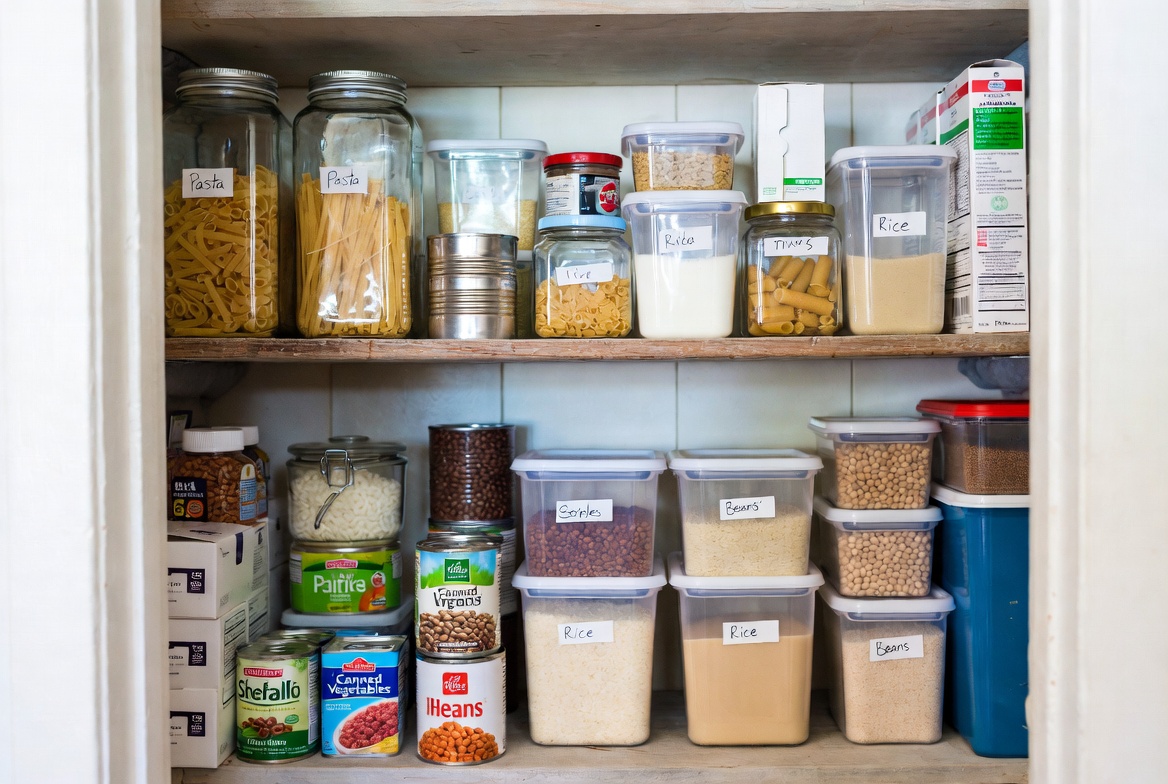
The 72-hour baseline is groceries you already own. A two-week supply is something different — it requires deliberate buying, deliberate rotation, and a small amount of math. It is also the level at which preparedness stops being a kit and starts being a practice.
What two weeks costs in calories
A working adult needs roughly 2,000 calories a day under normal conditions, and somewhat more under stress and cold. A family of four needs about 112,000 calories over fourteen days. The good news: ordinary pantry staples are extraordinarily calorie-dense per dollar.
The grocery-store pantry
We do not recommend buckets of freeze-dried meals as your two-week answer. They are expensive, taste industrial, and require water you may not have. The right two-week pantry is foods your household already eats, bought in larger quantities, and rotated through normal cooking.
Rotation, not storage
The single trick that makes a two-week pantry work is FIFO — first in, first out. When you buy a new bag of rice, the existing bag moves to the front. Every meal you cook pulls from the front. The pantry refreshes itself continuously, nothing expires, and on any given day you have between ten and twenty days of food on hand without thinking about it.
A two-week pantry is not something you have. It is something you do.
The list, by category
The companion two-week pantry checklist is the working document — print it, take it to the store, tick what you have and what you need. Below is the logic.
Grains (50% of calories)
Rice, pasta, oats. Cheap, dense, store for years, easy to cook with minimal fuel. Ten pounds of rice plus eight pounds of pasta plus five pounds of oats covers staple carbohydrates for two weeks for a family.
Proteins (25%)
Canned beans, canned tuna or chicken, peanut butter. Eighteen cans of beans and twelve of tuna sounds like a lot — it is roughly nine meals’ worth of protein if you stretch it.
Fats and dairy (15%)
Olive oil, vegetable oil, peanut butter again (it counts twice). Shelf-stable milk in aseptic boxes lasts about a year unopened.
Seasonings and morale (10%)
Salt, pepper, garlic powder, bouillon cubes. Coffee, tea, sugar, honey. These are not optional. Plain rice for two weeks is a meal you’ll eat once. Seasoned rice with hot tea and a square of chocolate is a meal you’ll eat thirteen more times.
How to cook it without the grid
A camp stove and two propane canisters. Or a single-burner butane stove, which costs $25 and runs forty minutes on a $2 fuel can. Either lives outdoors during use — never run combustion appliances indoors.
Get the next deep-dive in your inbox.
One new guide every other Sunday. The 72-hour starter pack as a printable PDF arrives the moment you sign up.
- The 72-hour starter pack PDF, immediately.
- A new deep-dive — like this one — every other Sunday.
- No upsells, no data sold, one-click unsubscribe.