Household medical emergency
Someone in the house just got hurt or fell ill. EMS is coming, but the next ten minutes are yours. Here is what to do in the first sixty seconds, while you wait, and in the days after.
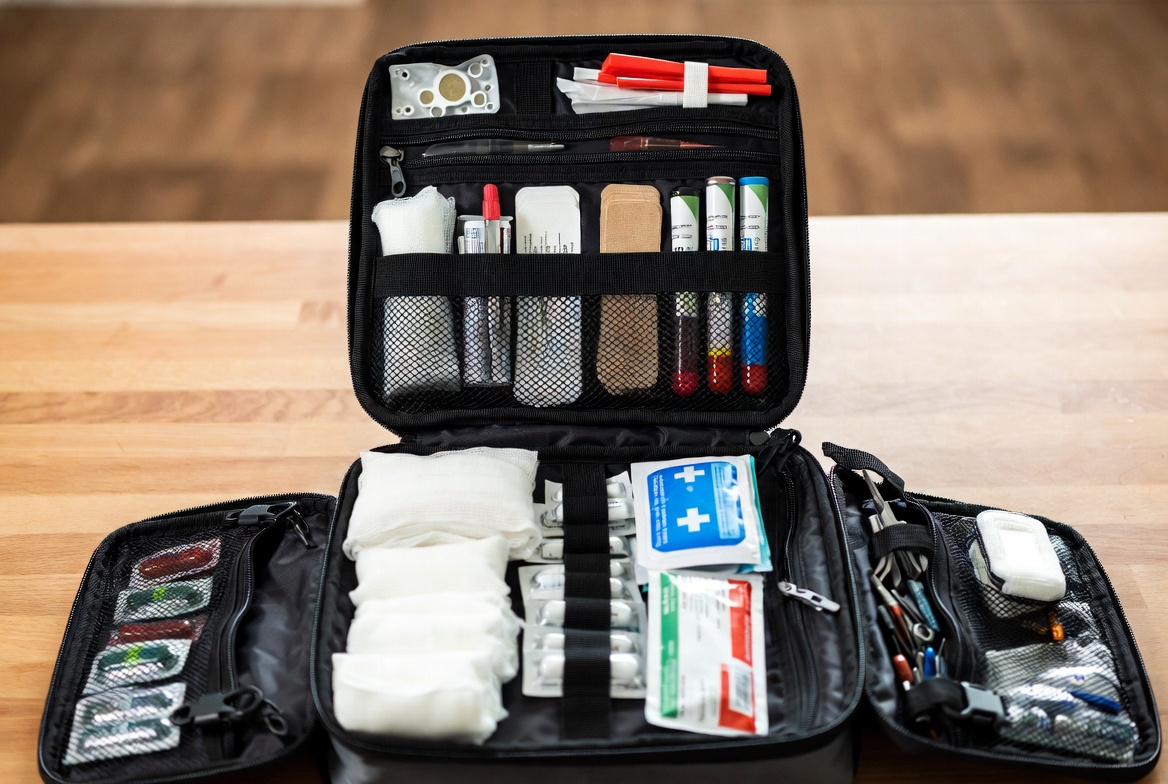
A household medical emergency is the playbook with the smallest window and the highest stakes. The first sixty seconds set the trajectory, the ten minutes until help arrives are yours, and the work you do before any of it happens — training, kit, documents — is what decides whether you can act when it matters. This is not a substitute for training. It is a framework for the day you need both.
Before — the only phase that actually prepares you
- Take a class. Stop the Bleed is a 90-minute course taught free at most hospitals and Red Cross chapters; it covers tourniquets, wound packing, and direct pressure. American Heart CPR/AED certification is a 4-hour course. Take both. Refresh them every two years.
- Build a real first aid kit, not a drugstore one. The store-bought kit is mostly bandaids. A useful kit has gauze, a tourniquet (CAT or SOFT-T Wide — not a no-name copy), trauma shears, an emergency blanket, gloves, OTC medications labeled with dosing, a thermometer, a pulse oximeter, and a paper card with everyone's allergies and prescriptions.
- Write the medical information card and put it on the fridge. For each household member: full legal name, date of birth, weight, blood type if known, allergies, current medications with dosages, primary care doctor, insurance, emergency contact. EMS reads it as they walk in the door.
- Know the address of your house. Sounds absurd. In a panic, people forget. Tape it inside the front door at eye level. The 911 dispatcher will ask within the first ten seconds.
- Know your nearest hospital, your nearest urgent care, and which one handles which kind of problem. Strokes go to stroke centers. Cardiac events go to cath labs. Knowing the difference shaves minutes.
- Make sure every adult in the household knows where the kit lives, where the AED is if you own one, and how to operate the garage door manually if the power is out and EMS is on the way.
First 60 seconds — assess and decide
- Make sure the scene is safe. Don't become the second patient. Downed lines, gas leaks, traffic, an unstable structure — fix the scene first or do not enter it.
- Check responsiveness. Tap and shout: 'Are you okay?' If they respond, they have a pulse and they're breathing. If they don't respond, you have a different problem.
- Call 911 — or assign one specific person by name to call 911 if others are present. 'Someone call 911' is the phrase that gets nobody to call. 'Krystal, call 911 now' gets it done.
- Look for the big three in this order: severe bleeding you can see, breathing problems, signs of stroke or cardiac event. These are the time-critical calls. Everything else can wait sixty seconds.
- If there's bleeding hard enough to pool on the floor or pulse out of the wound, apply direct pressure now, hard, with both hands, on top of clothing if needed. The tourniquet comes if pressure isn't holding.
- If they're not breathing or only gasping, start CPR. Hard, fast, in the center of the chest — to the beat of 'Stayin' Alive,' 100–120 compressions per minute, two inches deep on an adult. Do not stop until EMS arrives or they wake up.
- If you suspect stroke — face drooping, arm weakness, slurred speech — note the time the symptoms started. That number determines which treatments are still on the table at the hospital.
Waiting for EMS — the ten minutes that are yours
- Stay on the line with 911. The dispatcher coaches you through CPR, bleeding control, choking — they are trained to do this and they have your address open. Do not hang up.
- Unlock the front door. Turn on the porch light. If it's dark, send a household member outside with a flashlight to flag the ambulance. EMS lost in the wrong cul-de-sac is the most common preventable delay.
- Move furniture out of the path from the front door to the patient. The crew comes in with a stretcher and a kit. They need a corridor.
- Bring the medical card from the fridge to the patient's location. Bring the bottles of every medication they take. EMS will ask, and 'I think it's something for blood pressure' is not enough.
- Get the patient flat unless they tell you not to. Cardiac and respiratory patients often want to sit up — let them. Trauma patients should stay where they are unless the scene becomes unsafe. Do not give food or water.
- Cover them with a blanket. Shock drops body temperature and the room feels colder to them than to you.
- Send a second household member to corral pets and kids. Both will get in the way and both will compound the panic. A locked bedroom door for the dog is fine.
- Take a photo of any medication bottles, dosages, and the scene if there was a fall or injury. The ER will ask. The insurance claim will ask.
EMS arrives — handoff and follow
- Lead with the headline. 'My husband collapsed at 8:47, no pulse, CPR started at 8:48, I'm three minutes in.' Time, mechanism, your intervention. The crew works in that order.
- Hand them the medical card and the meds. Do not narrate symptoms while they're working — answer their questions, in order, in the words they used.
- Decide who rides and who follows. Most ambulances allow one rider; in COVID-era protocols, sometimes none. If you can't ride, get the destination hospital name and drive there. Do not chase the ambulance.
- Lock the house before you leave. Take phones, wallets, IDs, the medication bottles if EMS didn't take them, the medical card, and a charger. You may be at the hospital all night.
- Call one outside contact and have them call the rest. You cannot make six phone calls from a waiting room and stay sane.
After — the next 72 hours
- Write down what happened, in order, with times, before you sleep. The hospital, the insurer, and your own memory will all need it. The version you remember in three days is not the version that happened.
- Refill the kit. Every gauze pack, every glove, every medication you used — write it down and replace it within 48 hours. Most households don't, and the next emergency finds a kit short of what it needs.
- Schedule the follow-up. The discharge paperwork lists a primary-care visit window. Make that call before you leave the hospital parking lot.
- Tell two people outside the household what happened, in summary. Friends and extended family should not hear it from social media. A short message in plain language is enough.
- Take the class you've been putting off. The day after a real event is when the value of an 8-hour first responder course is the most obvious it will ever be.
- Decide what should have been different. Was the kit reachable? Did everyone know where it was? Was the medication list current? This is the most honest review of your medical readiness you will ever do.
A household medical emergency is the only event on this site that may happen this year, may happen next decade, or may have happened to you already this week. It is also the only one where the gap between trained and untrained is the difference between a recoverable outcome and a fatal one in the first ten minutes. Everything else on this site can be done by reading. This cannot.
Take a real class. Stop the Bleed is free, ninety minutes, and the most useful thing you can do for your household’s safety with that amount of time. CPR certification is half a Saturday. They are not abstract. They are the exact set of actions in the phases above, taught by people who have done them in real rooms with real patients.
This playbook leans hardest on two of the nine domains: health & first aid and communication. Documents matter — the medication list, the allergies, the contact card — but the failures in a medical emergency are almost always failures of training and of the first sixty seconds, not of supplies. You will own the gap between the moment something goes wrong and the moment a paramedic walks through your door. Make that gap survivable.
None of this is medical advice. This is a framework for action in the minutes before professional help arrives, not a substitute for it. Call 911 first, always. Take the class. Refresh the kit. The day you are glad you did is the day you will not have time to read this.
The household medical emergency plan at four depths
The playbook above is the event. The links below are the prep system — sized to the depth your household can actually sustain, with checklists, weighted domains, and the questions that come up for each combination.
Get the next playbook before the next storm.
When the next event playbook ships, you get it the day it drops — alongside the 72-hour starter pack PDF today. One new piece every other Sunday.
- The 72-hour starter pack PDF, immediately.
- An email the day the next playbook drops.
- No upsells, no data sold, one-click unsubscribe.