Food
Eat well, store smart.
Food is the domain where preparedness gets the most attention and the worst results. Households spend money on long-term storage that nobody in the family will actually eat, while ignoring the boring middle layer — the pantry that gets you through two weeks of disruption without ever opening a bucket. A working food plan is built from what your household already eats, scaled up, and protected by a rotation discipline that keeps it from rotting on a shelf.
The system: pantry, deep storage, means of cooking
A complete food plan has three layers.
Pantry is the food you already eat, in quantities that are deeper than usual. Rice, beans, canned protein, pasta, oats, oil, salt, coffee. This is the layer that handles every realistic two-week disruption, because it is food the household actually wants.
Deep storage is bulk staples sealed for the long horizon — mylar bags, food-grade buckets, oxygen absorbers. Wheat, rice, beans, sugar, salt. Cheap per calorie, stable for decades, useless if you have no plan to cook them.
Means of cooking is the ability to turn raw inputs into food when the kitchen does not work. A propane camp stove. A rocket stove. A wood fire if you have practiced one. Without this leg, half of deep storage is unreachable.
The four levels for food
72 hours. Three days of food from your existing pantry. Nothing exotic, nothing special-purchased — just enough of what you already eat to skip a grocery run.
Two weeks. A deeper pantry built around shelf-stable basics. Canned goods, dry goods, sealed proteins. A specific calorie target per person per day (2,000 is the planning number, even though most people eat less). Real attention to morale food — coffee, salt, hot sauce, whatever turns a meal into something tolerable rather than something endured.
Three months. Bulk dry storage enters the picture. You think in months of meals, not days of cans. Rotation becomes a discipline, not a hope. You write dates on lids.
Long-term. Production. A garden that produces meaningfully. Preservation skills (canning, dehydrating, freezing) practiced annually. Possibly livestock. Calories you can grow, not just buy.
First moves
- Eat dinner tonight from what is already in your pantry. Note what you ran out of, what you wished you had, what you reached for and could not find. That list is your first shopping list.
- The next time you grocery shop, buy fourteen days of shelf-stable food on top of normal groceries. Not buckets. Real food. Rice, canned beans, canned tomatoes, oil, oats, sugar, salt, peanut butter, dried fruit.
- Get a way to cook without electricity. A propane camp stove and two full canisters is the cheapest reliable answer for most households. Test it outside this weekend on actual food, not boiled water.
- Date everything. Marker on the lid, marker on the can. You cannot rotate what you cannot read.
- Build morale into the stash. Coffee, tea, hot sauce, salt, a few candy bars, the spices the household actually uses. Stored food that nobody enjoys does not get rotated, does not get eaten, and ends up wasted.
Common mistakes
Stockpiles of food the household will never voluntarily eat. MREs are the classic example — bought in volume, never opened, finally tasted years later under stress. Store what you eat. Eat what you store.
Deep storage with no cooking plan. Forty pounds of wheat berries is fifty thousand calories that requires a mill, water, fuel, and a baking surface. If any of those are missing, the wheat is decoration.
No rotation. Cans expire, oils go rancid, dry goods get weevils. A pantry that is not rotated annually is a pantry that fails when you actually open it.
Treating morale as optional. The first week of a disruption is the hardest emotionally. A household that has coffee in the morning and salt on dinner is a household that holds together. Morale food is food.
Where to go next
The content below covers food at every level. The two-week food supply guide walks through the calorie math and pantry composition. The two-week pantry checklist is the working short-list. Both are built around food a real household eats, not food that lives in a sealed bucket waiting for an event.
Guides, checklists, and gear for food.
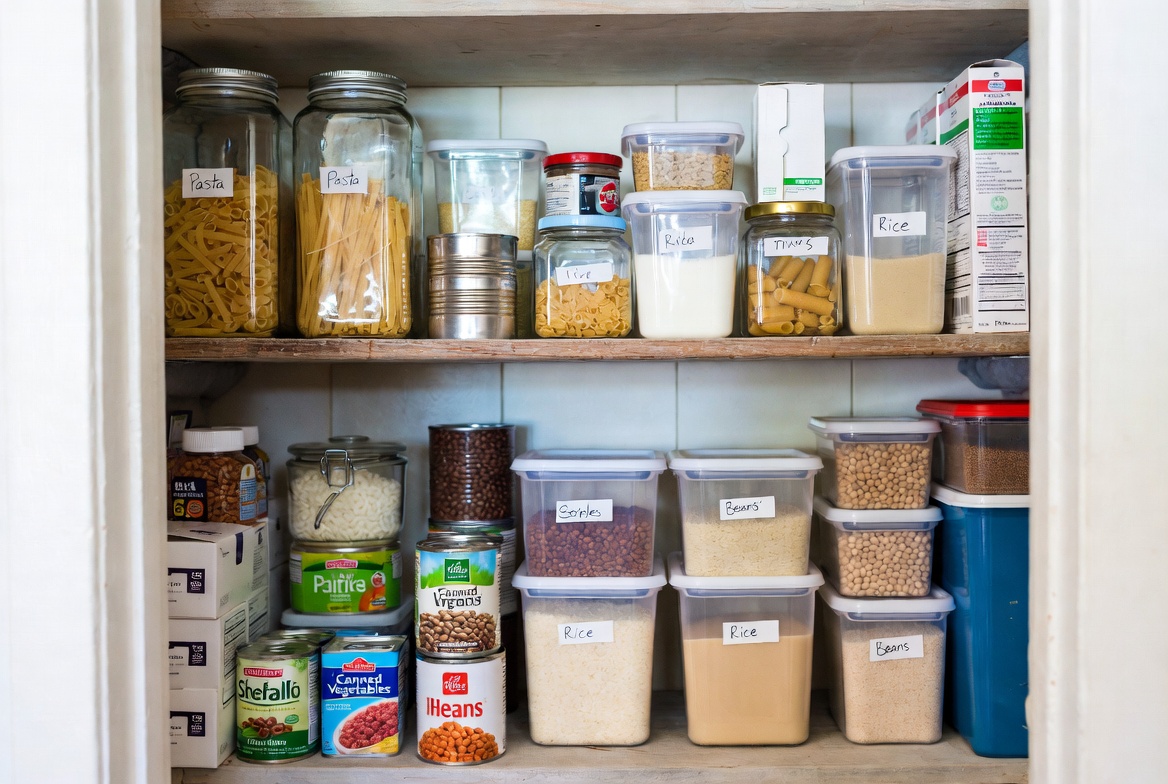
Building a two-week food supply
Beyond the 72-hour shelf. How to extend a pantry into a two-week buffer using groceries you already eat — not a stack of buckets gathering dust.
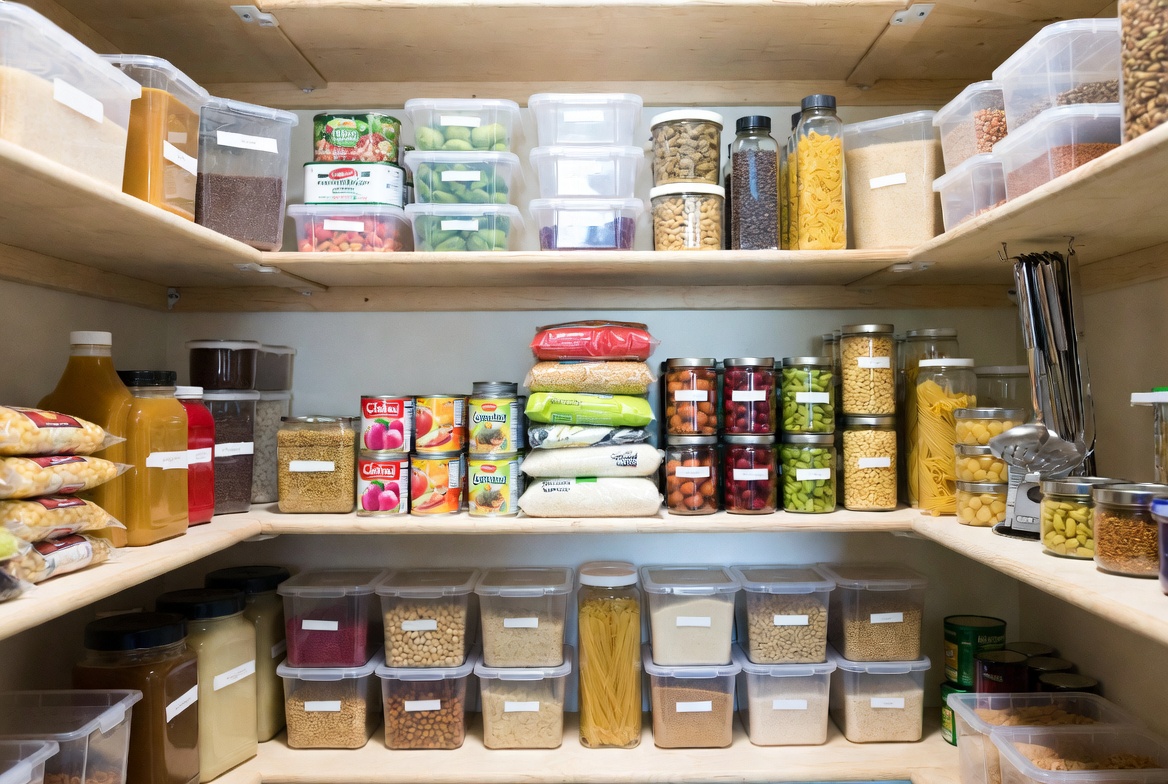
Two-week pantry checklist
A working list to take to the grocery store. Built around foods you actually eat, organized so nothing rots in the back of a shelf.
Get the next food guide in your inbox.
When the next food guide, checklist, or gear breakdown ships, you'll be the first to see it. Plus the 72-hour starter pack as a printable PDF today.
- The 72-hour starter pack PDF, immediately.
- An email the day the next food piece drops.
- No upsells, no data sold, one-click unsubscribe.