Water storage for a family of four
A gallon per person per day is the answer everyone repeats. Here is what that actually looks like on a shelf, where to put it, and how to keep it drinkable.
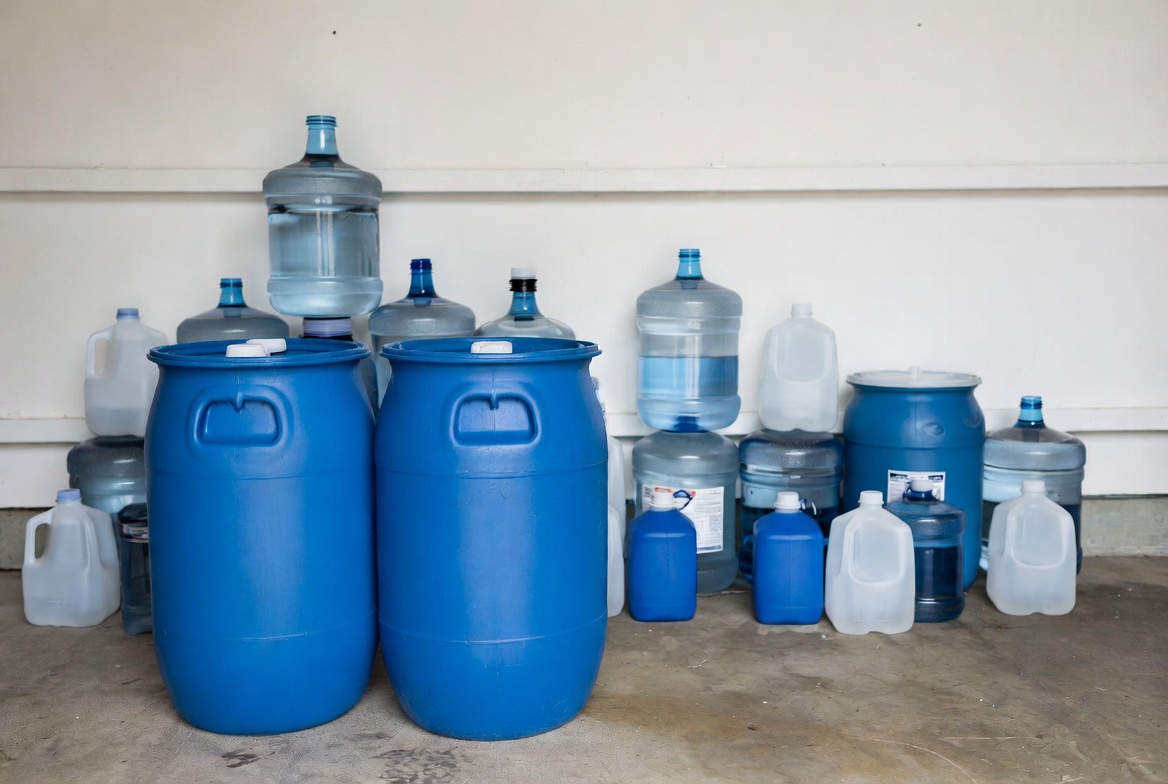
A gallon per person per day. Twelve gallons for a family of four, for three days. This is the answer everyone repeats, and it is correct. What it doesn’t tell you is what that actually looks like on a shelf, where to put it, or how to keep it drinkable for the years it will sit untouched.
How much, more precisely
The one-gallon rule covers drinking water plus minimal hygiene — brushing teeth, a sponge bath, washing the dish you ate canned chicken out of. It does not cover laundry, showers, or pets. In practice:
- Adults: one gallon per day, slightly more in heat.
- Children: half to three-quarters of a gallon.
- Pets: an extra gallon per medium dog per day; cats need much less.
- Nursing or pregnant adults: round up by 50%.
For a family of four with a dog, plan on roughly 5 gallons per day, or 15 gallons for the 72-hour baseline. Round to 18.
What 18 gallons looks like
Three 6-gallon stackable water containers, footprint about 16 by 12 inches each. Or a single 14-gallon water brick system. Or — the most accessible option — three flats of bottled water from any grocery store, which gets you roughly 17 gallons and fits on the floor of a closet.
Free water you forgot you had
A standard bathtub holds about 40 gallons. A water heater holds 30 to 80. Before any forecast disruption, fill the tub. After the outage, drain the heater into clean containers from the spigot at the bottom. This is two weeks of drinking water you did not have to store.
How to store it
Food-grade plastic, kept cool, out of direct sunlight, off concrete floors. Concrete leaches chemicals into plastic over years — a piece of cardboard or a wooden pallet under the container is sufficient. Label every container with the date you filled it.
How long it keeps
Commercially bottled water carries an expiration date for regulatory reasons, not safety ones. Properly stored tap water in a sealed food-grade container is safe to drink indefinitely. It will taste flat after a year — pour it between two glasses to re-aerate before drinking and it tastes like fresh water again.
Treating water you don’t trust
If you ever exhaust stored water and need to treat what comes out of a tap, a puddle, or a creek, you have three options in order of preference:
- Boil. A rolling boil for one minute (three minutes above 6,500 feet) kills everything biological. It does not remove chemical contaminants.
- Filter. A Sawyer Squeeze or similar hollow-fiber filter removes bacteria and protozoa, costs $35, and lasts years. Worth keeping in the kit.
- Chemically treat. Eight drops of unscented household bleach per gallon, mix, wait 30 minutes. Faint chlorine smell means it worked. No smell, double the dose and wait another 15.
The Level 2 step up
Two-week water storage is roughly 70 gallons for a family of four — past the bottled-water threshold, into the world of dedicated barrels or a Water BOB for the bathtub. We cover that in the two-week water plan — storage logistics, treatment, and the sourcing plan that carries you past what any shelf can hold. For now, eighteen gallons in a closet is the move.
Questions readers ask.
- How much water does a family of four need for 72 hours?
- Twelve gallons — one gallon per person per day, for three days. That covers drinking and minimal hygiene. It does not cover laundry, showers, or pets. In hot weather or for physically active members, plan closer to a gallon and a half per person per day.
- How long does stored water last?
- Commercially bottled water carries a printed best-by date but is safe well beyond it if stored cool and out of sunlight. Tap water stored in a clean, food-grade container with a tight lid lasts indefinitely; rotate every six months for the best taste. Light, heat, and contact with non-food plastics are what shorten the usable life — not time alone.
- Can I store tap water for emergencies?
- Yes. Municipal tap water is already treated and can be stored as-is in clean, food-grade containers with tight lids. Wash containers with soap and water, rinse, fill to the top, label with the date, and store cool and dark. Well water should be treated with a few drops of unscented household bleach per gallon before sealing.
- Where should I store emergency water?
- Cool, dark, and off the floor. Closets, basements, and the back of pantries work well. Avoid garages — temperature swings degrade plastic containers and shorten usable shelf life. Never store water next to gasoline, pesticides, or solvents, even sealed; vapors can permeate plastic.
- Do I need a water filter?
- For 72 hours, no — stored water is enough. For two-week and longer plans, yes. A gravity-fed countertop filter (the kind that holds three to four gallons) or a high-capacity backpacker filter buys you the ability to make any non-chemical-contaminated water source drinkable: a creek, a rain barrel, the hot-water tank in your basement.
Get the next deep-dive in your inbox.
One new guide every other Sunday. The 72-hour starter pack as a printable PDF arrives the moment you sign up.
- The 72-hour starter pack PDF, immediately.
- A new deep-dive — like this one — every other Sunday.
- No upsells, no data sold, one-click unsubscribe.