Wildfire evacuation
The smoke comes first. Then the warning. Then the order. Here is what to do before the season, when the alert hits your phone, and in the hour you have to leave.
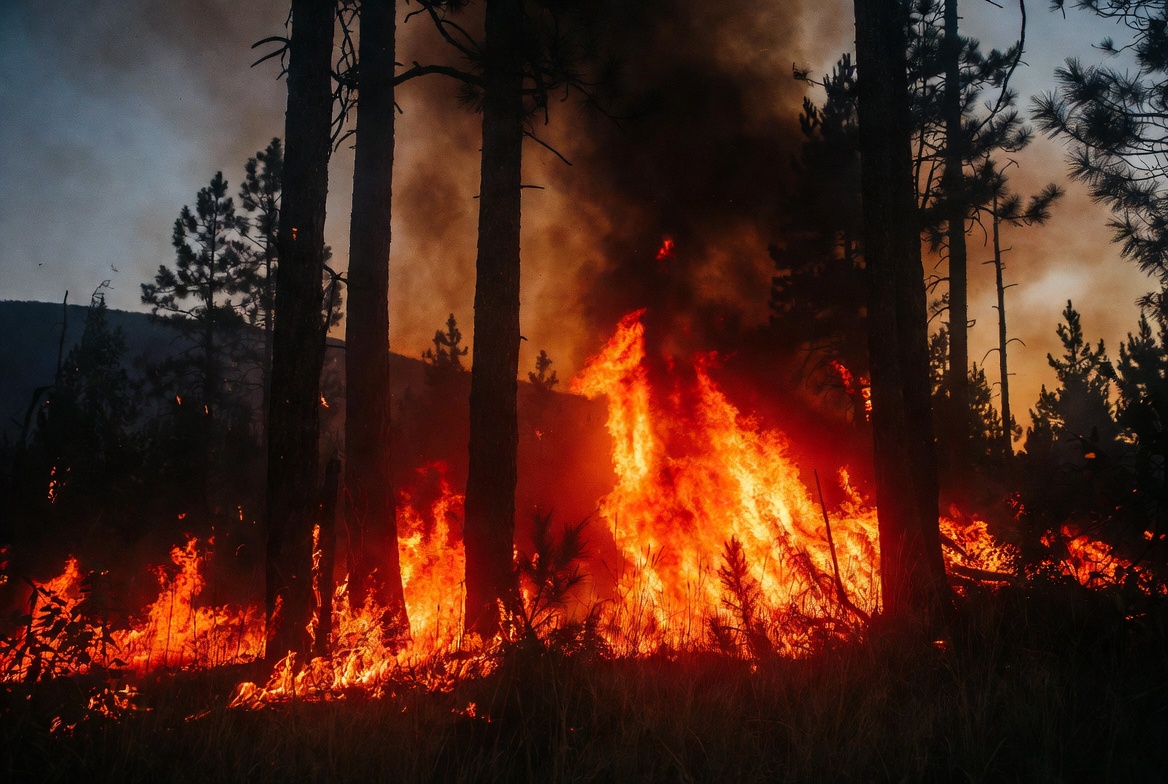
A wildfire playbook is an evacuation playbook with a stopwatch. You rarely choose the timing, and you almost never get to come back to the same house twice in the same condition. The work is done before the smoke shows up — documents staged, go-bag pre-packed, routes memorized — because once the order comes, you have minutes, not hours.
Before fire season — the annual prep window
- Clear defensible space. Thirty feet of cleared brush around the structure is the minimum in most wildland-urban-interface codes. Sixty to one hundred feet is the right answer if your terrain allows it.
- Move firewood, propane tanks, and combustible patio furniture away from the house. A stacked woodpile against a wall is a wick.
- Photograph every room of your house and the contents of every closet, drawer, and shelf. Insurance claims are won and lost on dated photos taken before the fire.
- Build the go-bag and keep it by the door, not in storage. Every adult has one. Each contains: 72 hours of clothes, medications, phone charger and battery, copies of IDs, a small cash reserve, water, a flashlight, and a paper list of contacts.
- Sign up for your county's emergency alert system. Cell broadcast alerts are not enough — counties push the most specific evac information through their own systems. The county sheriff's office or OEM website has the signup.
- Pick two evacuation routes out of your area. Drive them. Note where they bottleneck. Highways close fast in wildfire — the back roads matter.
- Identify your meet-up point. Where does the household reconvene if you get separated and phones don't work? It should be outside the likely evacuation zone — a relative's house, a hotel two counties over, a parking lot you all know.
Red flag day / smoke in the air
- Park every vehicle in the driveway pointed out, fueled, with the keys in a known location. If you have to leave at 3 a.m. you don't want to be backing out of a garage.
- Move the go-bags from inside the house to the vehicles. The five minutes you save not running back inside might be the five minutes that matter.
- Charge every battery in the house. Phones, power banks, headlamps, the radio.
- Pull cash from an ATM. $200–$500 in small bills. Cell networks and card readers fail before the evacuation order does.
- Bring pets indoors and put their carriers near the door. A panicked cat under a bed is a thirty-minute delay you will not have.
- Check air quality. If AQI is above 150 and someone in the household has asthma, COPD, or a heart condition, the indoor air filtration plan starts now — close windows, run HEPA, mask up outside.
- Stage critical documents in the vehicle: passports, IDs, deeds, insurance policies, prescription list, the photo backup drive. A waterproof bag is enough.
Evacuation warning — be ready to leave
- Load the cars. Go-bags first, then the categories on your written list: documents, hard drives, photo albums, the items you cannot replace. Don't make this list at the warning — make it in winter.
- Tell two people outside the warning area where you are going and when you plan to leave. They are your wellness check if you go off-grid.
- Confirm both evacuation routes are still open. Use the county OEM Twitter/X feed, the state DOT, and 511 — not just a navigation app. Apps route into closed roads.
- Close every interior door. It slows the fire's spread inside the house and gives firefighters something to work with if they get there.
- Shut off the propane at the tank. Turn off the gas at the meter if you can do it safely — your utility's website has the procedure for your model.
- Move outdoor furniture, doormats, and propane bottles away from the structure. Anything flammable within ten feet is fuel.
- If you have a hose long enough to reach the roof, lay it out connected. Some firefighters working a structure will use what's already there.
Evacuation order — go now
- Leave. The order is not a suggestion. Households that delay during evacuation orders are the ones overrun by fire fronts and the ones blocking exit routes for everyone behind them.
- Take only the bag and the list. Anything not already loaded is not coming. The temptation to grab one more thing has killed people.
- Wear long sleeves, long pants, closed shoes, and bring an N95 or better. Embers are the largest cause of structure ignition and the largest cause of evacuation injury.
- Lights on, even in daylight. Smoke drops visibility to under a hundred feet. You want to be seen.
- Do not pass downed power lines, do not drive over hoses, and do not park in the road if you stop. Evacuation routes also serve as fire-engine corridors.
- Check in with your outside contact when you reach your meet-up. Text, don't call — text gets through when voice circuits are overloaded.
- If you are caught in your vehicle in fire, do not run. Stop in a low-fuel area, close windows and vents, get low on the floor, cover with wool or cotton (not synthetic), and wait. Cars do better in fire than people on foot.
After — return and recovery
- Do not return until officials reopen the area. Hot spots, weakened trees, and downed lines kill more people in the days after a fire than during it.
- Photograph everything before you touch anything. Every angle of every room, every damaged structure, every burned vehicle. Insurance lives on these photos.
- Assume ash is hazardous. Wear an N95, gloves, long sleeves, and boots while assessing. Wildfire ash contains heavy metals, asbestos from older homes, and combusted plastics.
- Do not turn the power back on until an electrician has cleared the panel. Fire damage to wiring is often invisible until current flows.
- Treat all standing water on the property as contaminated. Wildfire runoff into wells and cisterns requires testing before use.
- File the insurance claim within the first 48 hours back. Adjusters are slammed after a major fire. Earlier in the queue is earlier in the payout.
- Write down what you wish you had. The list of things you grabbed and the things you wished you had grabbed is the most honest review of your go-bag you will ever do.
A wildfire moves in three speeds at once: slow enough that you can see it coming for a week, fast enough that the evacuation window from warning to order can collapse from days to minutes, and then so fast — fifty miles an hour through dry chaparral, embers carried miles ahead of the front — that no plan made on the day of holds up. The plan has to exist before the smoke does.
This playbook leans hardest on three of the nine domains: documents & finance, shelter & warmth, and communication. Health and first aid matter at the margins — smoke inhalation, burns, an asthma attack in a household member you didn’t think was at risk — but the core failures in a wildfire evacuation are the documents you couldn’t find, the route you didn’t know was closed, and the family member you couldn’t reach. Those three are where the next two weeks of your life are decided.
The single most useful thing in this playbook is the go-bag by the door. Not in a closet. Not “I know where it is.” At the door, with the cars pointed out, the documents staged, and a phone tree you’ve tested. Wildfire is the event where the difference between three days of inconvenience and a year of recovery is the work you did in February.
The wildfire evacuation plan at four depths
The playbook above is the event. The links below are the prep system — sized to the depth your household can actually sustain, with checklists, weighted domains, and the questions that come up for each combination.
Get the next playbook before the next storm.
When the next event playbook ships, you get it the day it drops — alongside the 72-hour starter pack PDF today. One new piece every other Sunday.
- The 72-hour starter pack PDF, immediately.
- An email the day the next playbook drops.
- No upsells, no data sold, one-click unsubscribe.