Water
Clean, store, source.
Water is the resource that fails first. A person can go weeks without food and only a few days without water — and that ceiling drops fast in heat, in exertion, in illness. It is also, by weight, the heaviest thing you will ever store. That combination — short timeline, heavy stockpile — is what makes water the part of preparedness most people get wrong. They either store a lot less than they think, or they trust a single method when the situation calls for three.
The system: clean, store, source
A complete water plan rests on three legs.
Clean is the ability to make found water safe. Boiling, mechanical filtration, chemical treatment. Each method covers a different threat — boiling handles biological contamination but not chemicals, filters strip particulates and most pathogens, chlorine and iodine reach what filters miss. You want at least two methods you have actually used.
Store is what you already have on hand, ready to drink, no preparation required. Sealed containers in a closet, the basement, the garage. Storage is what carries a household through the first hours and days, before any kind of sourcing is necessary or possible.
Source is knowing where water lives in your environment when stored water runs out. Your water heater. The pipes in your walls. Rainwater. The creek a mile down the road. Most households address storage and ignore the other two. That’s a one-leg stool.
The four levels for water
72 hours. Three gallons per person, stored. That’s the rule of one gallon per person per day for drinking, cooking, and basic hygiene. A family of four needs twelve gallons sitting in a closet. This is the starting line, and most households are not on it.
Two weeks. Fourteen gallons per person — or a smaller stash combined with a filter you trust and a sourcing plan. Storage logistics start to matter at this level. Where the water lives, how it rotates, what containers can stack, whether the floor underneath them can take the weight.
Three months. You stop trying to store everything. Ninety gallons per person across a four-person household is 360 gallons — that is a 55-gallon drum tipped over six times, or a small swimming pool. At this level you shift the center of gravity from storage to sourcing. A serious filter, rainwater capture, working knowledge of every body of water within walking distance.
Long-term. Production. Wells, rainwater systems, the discipline to handle greywater. You no longer store for an event. You run a household water economy.
First moves
- Do the math for your household. One gallon per person per day, fourteen days, plus pets. Write the number down. That is your two-week target.
- Get water into something before tonight. Sealed bottles from the store, refilled five-gallon jugs, food-grade barrels — the perfect container is whatever you have today. You can upgrade later. Empty is the only failure.
- Locate the shutoff and drain valve on your water heater. A typical tank holds forty to fifty gallons of clean, potable water. Most households never realize it is there.
- Buy one filter you trust. A Sawyer Mini at the bottom end, a gravity-fed Berkey-class system at the top. The brand matters less than owning one and knowing how to use it.
- Open a map. Identify the nearest natural water source within a mile of home. Then the next one. Sourcing starts with knowing where to go.
Common mistakes
Storing water in milk jugs. They are not food-grade, the plastic degrades, and the seams fail. Use new water jugs, food-grade barrels, or sanitized two-liter soda bottles.
Counting tap water as stored. Tap water is rotating water in pipes. It is not yours until it is sealed in a container you control. The grid going down is exactly when the difference matters.
Treating “water” as one problem. Storage solves the first three days. After that, sourcing and treatment carry the load. A household that has only stored water is on a countdown.
Owning a filter you have never used. Filters clog, freeze, and develop slow leaks. They have shelf lives. Cycle through yours once a year on real water, not the kitchen tap, so the first time you depend on it is not the first time you operate it.
Where to go next
The content below is organized by level. If you are at zero, start with the seventy-two-hour readiness checklist — it is the working short-list to tape inside a closet door. The two-week water guide walks through storage logistics, rotation, treatment, and sourcing. The family-of-four guide does the math for households planning at scale.
Guides, checklists, and gear for water.
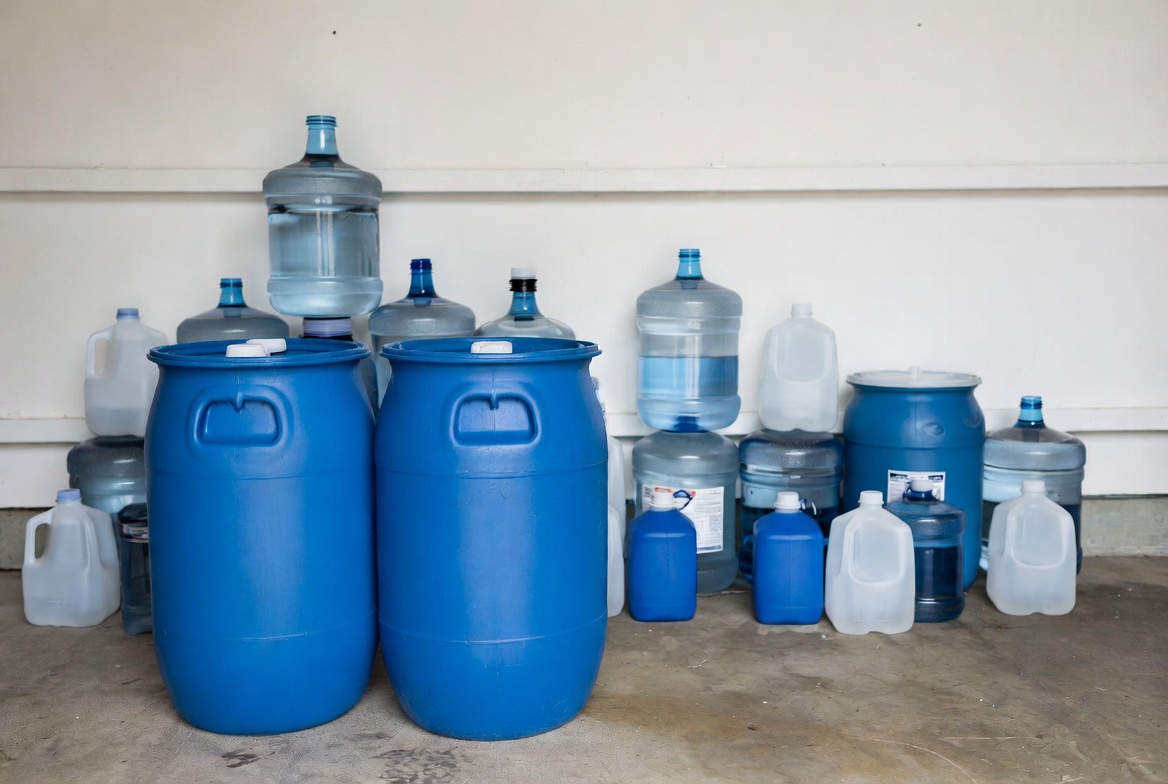
Two weeks of water
Fourteen gallons per person is the number, and the number is the easy part. The hard parts are weight, floor space, rotation, and what happens on day nine when the stored water runs out — which is why a real two-week plan is storage plus treatment plus sourcing, not a wall of jugs.
Water storage for a family of four
A gallon per person per day is the answer everyone repeats. Here is what that actually looks like on a shelf, where to put it, and how to keep it drinkable.
Get the next water guide in your inbox.
When the next water guide, checklist, or gear breakdown ships, you'll be the first to see it. Plus the 72-hour starter pack as a printable PDF today.
- The 72-hour starter pack PDF, immediately.
- An email the day the next water piece drops.
- No upsells, no data sold, one-click unsubscribe.