The 72-hour baseline: what every household actually needs
No bunker. No tactical gear. Just the small, finite set of supplies and decisions that turns a bad weekend from a crisis into an inconvenience.
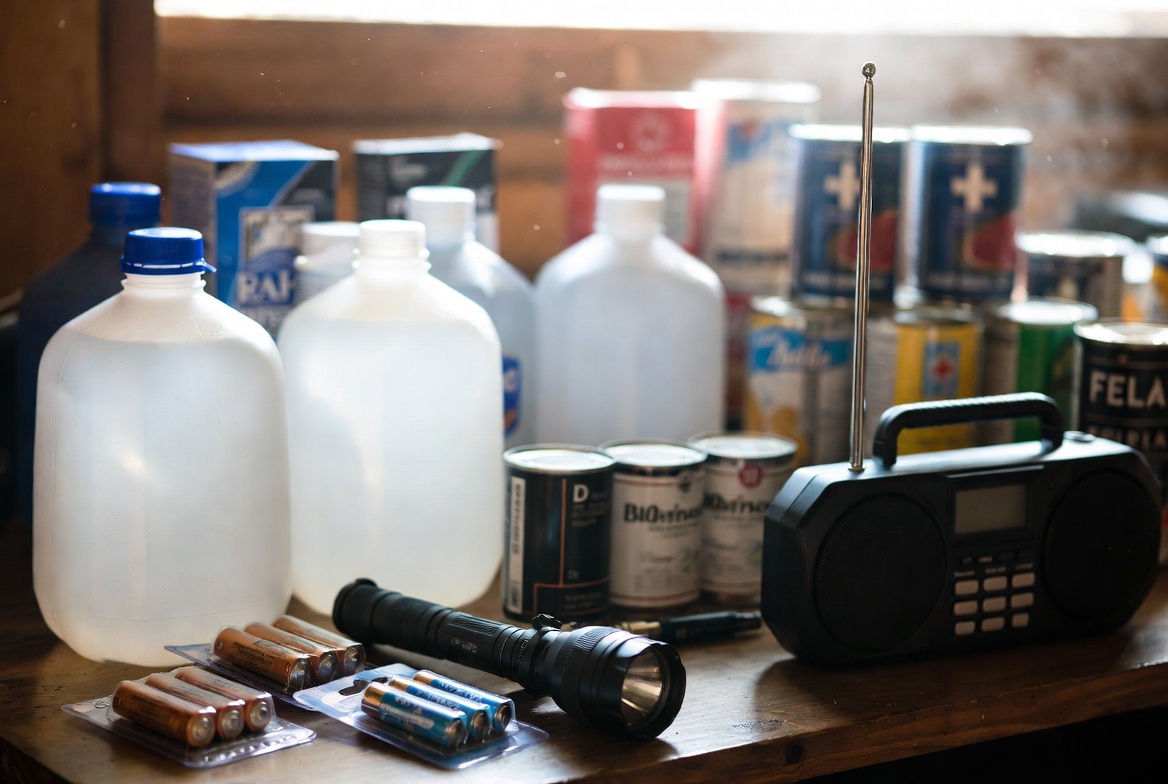
The hardest part of getting prepared is not the supplies. It is admitting that nothing you do today will feel necessary tomorrow — until the one tomorrow when it will be the only thing that matters.
A 72-hour baseline is the smallest investment in preparedness that pays off the most. It is also the most honest assessment of your household you will ever make. Most American households have, in actual function, somewhere between four and eighteen hours of resilience. A real 72-hour baseline brings that to three full days — and three days is what stands between a bad weekend and a genuine emergency.
What 72 hours actually means
72 hours is a frame, not a guarantee. It is the window covered by FEMA, by every utility’s mutual-aid agreement, by the National Guard’s worst-case mobilization. After three days, help reaches almost any inhabited part of the country. Before three days, you are on your own. We design for the second part.
If your household can produce a hot meal, a warm sleep, a charged phone, and a moment of calm for 72 hours without help — you are ready for nearly everything that happens to most Americans most of the time.
The six categories
We organize the baseline around six things, in this order of priority. Each gets its own row on the checklist, and each is a complete domain elsewhere on the site if you want to go deeper.
1. Water
One gallon per person per day. Round up. A family of four needs twelve gallons for three days — that is two 6-gallon BPA-safe jugs in a hall closet, or a stack of 24 store-bought bottles. Water is heavier than people remember, and the cleanest of the six categories: any water you store today is just as good in five years if it is in food-grade plastic and out of the sun.
2. Food, no cooking
You will not feel like cooking. You may not have a working stove. Your 72-hour shelf should be foods your household actually eats, eaten cold or at room temperature: peanut butter, crackers, canned tuna, jerky, nuts, dried fruit, granola bars. Calorie-dense, palatable when stressed, and rotated through your normal pantry once a year.
3. Power & light
One headlamp per adult, by the bed. A 20,000 mAh phone battery, kept charged. A way to receive weather alerts that doesn’t depend on a working tower — a hand-crank NOAA radio is the cheapest answer, a battery model is the better one.
The single most-forgotten item
A manual can opener. Every house has cans. Most houses have one can opener. Every store sells them for four dollars.
4. First aid
The drugstore kits are mostly band-aids and antibiotic ointment. A real kit adds trauma gauze, an Israeli pressure bandage, a tourniquet, and — most importantly — a 14-day supply of every prescription your household takes. The trauma items will never come out. The prescriptions are why your kit pays off in the boring emergencies, too.
5. Documents & cash
Scanned IDs, insurance cards, and prescription bottles in a password-locked phone folder. Printed copies in a waterproof pouch in the same place as the first aid kit. And cash — small bills, $200–$500. ATMs and card readers fail with the power.
6. Comms & plan
A handwritten list of phone numbers, because you cannot call anyone whose number you only have in your contacts. Two designated meeting places — one nearby, one outside the neighborhood — that every household member knows. A working flashlight by each bed.
Where to keep it
Together. The single biggest predictor of whether a kit gets used is whether all of it is in one place. A closet near an exterior door. A shelf in the garage. A duffel under a bed. We do not recommend buckets in basements — water rises, and you do not want to negotiate stairs in the dark.
The maintenance ritual
Twice a year, when the clocks change. Rotate the food into the regular pantry and replace it. Check the batteries. Update the document copies. It takes thirty minutes. It is the entire reason a household stays at Level 1 instead of slowly slipping back to zero.
What’s next
This guide is the spine. The 72-hour readiness checklist is the working document — tick it off, save your progress, print it for the fridge. From there, the paper layer has two deep guides at this level — the family communication plan and the grab-and-go document kit, each a single evening of work — and Level 2 extends every piece of this to two weeks.
Questions readers ask.
- How much water do I need for 72 hours?
- One gallon per person per day for three days — twelve gallons for a family of four. That covers drinking and minimal hygiene. Pets need their own supply (about half a gallon per day for a dog or cat). In hot climates or for physically active members, plan closer to a gallon and a half per person per day.
- What food belongs in a 72-hour kit?
- Calorie-dense, ready-to-eat food that needs no refrigeration, no preparation, and ideally no can opener. Peanut butter, dry cereal, granola bars, jerky, shelf-stable tuna pouches, dried fruit, nuts. Plan around 1,500 to 2,000 calories per person per day. Comfort matters less than calories during a short outage, but variety helps morale.
- Do I need a generator for a 72-hour kit?
- No. A 72-hour baseline does not require a generator. What it requires is a way to charge a phone, run a flashlight, and keep a CPAP or other medical device running if someone in the household depends on one. A small battery-only power station or a few high-capacity battery banks covers most households for three days. Generators are a Level 2 conversation.
- Where should I store a 72-hour kit?
- One central, accessible location — usually a hallway closet, a mudroom, or the room you would shelter in during a tornado. Avoid garages (temperature swings ruin batteries and shorten food shelf life) and attics (same problem, plus harder to reach in a hurry). The right spot is the one you remember in the dark.
- How often should I check a 72-hour kit?
- Twice a year, on the daylight-saving-time changes. Replace expired food and water, test the flashlights, check the batteries, and update any medications. The spring review also catches anything that quietly drifted out of the kit over the holidays.
Get the next deep-dive in your inbox.
One new guide every other Sunday. The 72-hour starter pack as a printable PDF arrives the moment you sign up.
- The 72-hour starter pack PDF, immediately.
- A new deep-dive — like this one — every other Sunday.
- No upsells, no data sold, one-click unsubscribe.