The grab-and-go document kit
A disaster that takes your house also takes the paper that proves your house existed. One binder, one evening, and about forty dollars closes the gap — identity, access, and the records that make recovery a process instead of a second crisis.
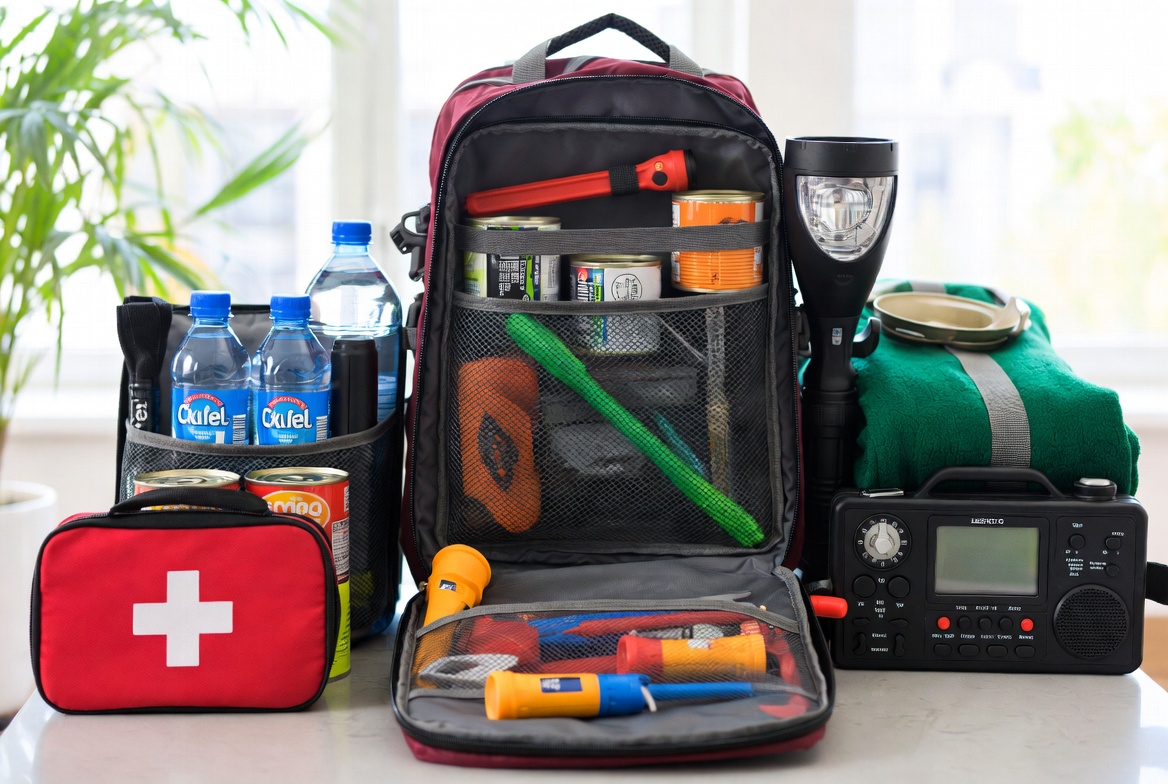
Picture the night after the house fire. Everyone is out, everyone is safe — the only thing that went right that needed to. Now the insurance company wants the policy number. The hotel wants a card that’s in a wallet on a counter that no longer exists. The pharmacy needs a prescription history to refill the medication that burned. You are about to spend months proving facts about your own life, and every proof you’d reach for was in the building.
That second crisis is fully preventable, and preventing it is the cheapest project in preparedness: one binder, one evening, about forty dollars.
This guide is the L1 extension of the Documents & Finance pillar. The pillar frames the domain as three jobs — identity, access, continuity — and this is the 72-hour implementation: the physical kit that walks out the door when you do.
The binder
Buy a zippered, water-resistant document binder or pouch — the kind sold for exactly this purpose runs $20–30. It should be one object, one hand, one motion. A “kit” that is a folder here, an envelope there, and a stack on the desk is a scavenger hunt scheduled for the worst possible moment.
It lives where you can grab it in under a minute on the way out: a closet shelf near the exit. Not the basement, not the attic, not a fire safe with a keypad you’ve opened twice. The binder’s job is speed. The fire safe’s job is protecting originals you leave behind. They are different jobs and they get different homes.
What goes in it sorts into four categories.
Identity — prove who you are
- Passports (originals, if you don’t travel often enough to keep them elsewhere)
- Copies of birth certificates for every household member
- Copies of social security cards
- Copies of driver’s licenses, front and back
- Recent photos of each family member and each pet — for the reunification scenario nobody likes to think about
Copies do real work here. A photocopied birth certificate will not board a plane, but it answers most of what a shelter, a school, an insurer, or a records office asks for, and it tells you exactly what to order a certified replacement of.
Property — prove what you own
- Homeowner’s or renter’s insurance policy: the declarations page at minimum, with the policy number and the claims phone number circled
- Auto insurance cards and vehicle titles (copies)
- Deed or lease (copy)
- A ten-minute video walkthrough of your home, narrated, stored in the cloud — open every closet, every drawer. After a total loss, the claim is built from inventory, and memory under grief is a bad inventory tool.
Money — keep moving when the cards stop
- $200–500 in small bills. Outages take card readers and ATMs down together; the gas station running on a generator is cash-only, and so is the neighbor selling generator hours. Twenties and smaller.
- A one-page account list: bank names and account types, credit cards (issuer and last four digits, not full numbers), utilities, mortgage or landlord contact. Enough to make every necessary phone call from a borrowed phone.
- A note of where the password manager recovery kit lives. The accounts themselves stay behind strong authentication — the binder just makes sure lockout isn’t part of the disaster.
Health — keep treatment continuous
- A current medication list for each person: drug, dose, prescriber, pharmacy
- Health insurance cards (copies)
- Immunization records, especially for kids — schools and shelters ask
- A short medical summary for anyone with a serious condition: diagnoses, allergies, devices, the paragraph an ER doctor needs when the patient can’t supply it
The digital layer
Scan everything in the binder. Phone camera is fine. Store the scans twice: an encrypted cloud folder, and an encrypted USB drive that lives in the binder. The cloud copy survives the house; the USB copy survives a dead phone and a forgotten password; the paper survives everything that kills electronics.
Three copies, three failure modes, no overlap. That redundancy costs maybe fifteen dollars of USB drive and an hour of scanning.
One discipline makes the digital layer trustworthy: encrypt before you upload anything with a social security number on it, or use a zero-knowledge storage service. A document kit that leaks identity is solving one problem by creating its sequel.
The one-evening build
This is a single-evening project, and the evening pairs naturally with the family communication plan — same table, same energy, and the contact card that plan produces goes straight into this binder.
- Buy the binder and pull the documents listed above. (45 minutes)
- Photocopy or scan-and-print the copies. (30 minutes)
- Shoot the home inventory video. (15 minutes)
- Scan everything to the cloud folder and the USB drive. (30 minutes)
- Get the cash next time you’re at the bank. Envelope, into the binder.
- Put the binder on its shelf and tell every adult in the house where it lives.
Set a calendar reminder for January: refresh the copies, recount the cash, re-shoot the video if anything big changed. Documents are the quietest prep there is — nothing about daily life tells you the insurance policy in the binder is two renewals old.
Where this fits
The binder earns its keep most visibly in evacuation events — the wildfire playbook and hurricane playbook both have a “grab the documents” step measured in seconds precisely because this kit exists. And it slots into the broader starting line laid out in the 72-hour baseline, alongside water, light, and first aid.
Most preparedness purchases defend against the dramatic version of disaster. The document kit defends against the bureaucratic version — the months of phone calls, waiting rooms, and “can you verify” that follow the dramatic part. Forty dollars and an evening now, or a second crisis later, scheduled for the exact moment you have the least capacity to handle it. That’s the trade. Take the evening.
Questions readers ask.
- What documents should be in an emergency grab-and-go kit?
- Four categories: identity (passports, birth certificates, social security cards), property (insurance policies, deed or lease, vehicle titles), money (account list, a few hundred dollars in small bills), and health (medication list, immunization records, insurance cards). Copies are acceptable for most of it — the goal is to walk out the door with enough paper to prove who you are, what you own, and what you need.
- Should I keep original documents or copies in the kit?
- Copies for anything that lives in a safe deposit box or fire safe; originals for the things you'd need fast — passports and social security cards are the usual choice. A waterproof binder of good copies solves 90% of post-disaster paperwork. Note where each original lives on the copy itself, so under stress nobody has to remember.
- How much cash should be in an emergency kit?
- Enough for three days of fuel, food, and a night of lodging with cards down — for most households, $200–500 in small bills. Power outages take card readers and ATMs down together, and the gas station that is pumping on a generator is cash-only. Twenties and smaller; a hundred-dollar bill is hard to break when change is scarce.
- Is it safe to store document scans in the cloud?
- Encrypted cloud storage of document scans is a reasonable second copy, and far better than no backup. The risks to weigh are account lockout (use a password manager and a recovery method that doesn't depend on the phone) and provider breach (encrypt sensitive scans before upload, or use a zero-knowledge service). The cloud copy backs up the binder. It does not replace it — a dead phone and a forgotten password is a complete failure of a cloud-only plan.
- Where should the document binder be stored at home?
- Somewhere a stressed adult can reach in under a minute on the way out the door — a closet shelf near the exit, not a basement fire safe. The binder's job is evacuation speed; the fire safe's job is protecting originals you leave behind. Households that merge the two jobs into one location usually get both wrong.
Get the next deep-dive in your inbox.
One new guide every other Sunday. The 72-hour starter pack as a printable PDF arrives the moment you sign up.
- The 72-hour starter pack PDF, immediately.
- A new deep-dive — like this one — every other Sunday.
- No upsells, no data sold, one-click unsubscribe.