The family communication plan
When the cell network fails, the households that find each other are the ones that decided how before they had to. A working family communication plan is one page of paper, three decisions, and a radio that costs less than a tank of gas.
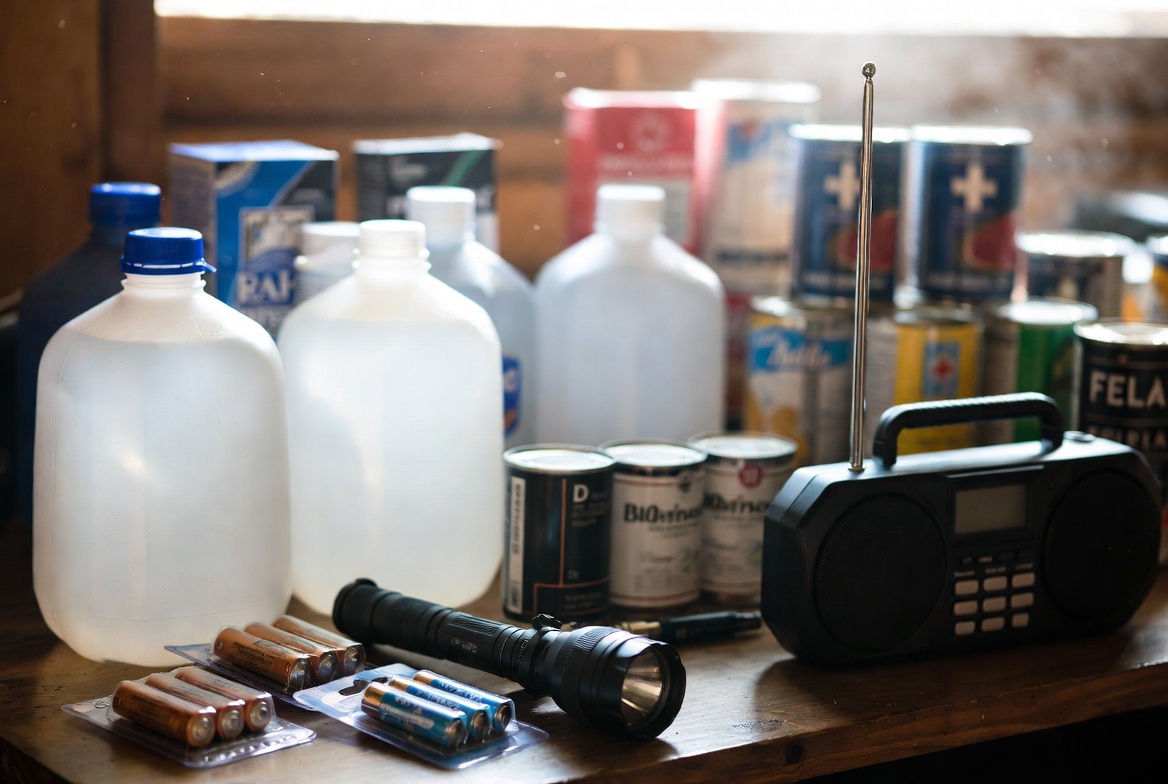
Nine emergencies out of ten, your phone works. The storm knocks the power out, the cell sites run on battery backup for a few hours, the texts go through, everyone is accounted for by dinner.
The tenth one is the problem. The regional event — the hurricane, the wide grid failure, the wildfire that takes the towers with it — is precisely the one where everyone tries to call everyone at once, and the network that survives the wind dies under the load. The moment you most need to reach your family is the moment the tool you planned to use is a calculator with a flashlight.
This guide is the L1 extension of the Communication pillar. The pillar lays out the three-leg framework — information in, communication out, plan B — and this is the 72-hour version: what a household actually writes down, buys, and practices to be ready for the tenth emergency. None of it requires a license, and all of it together costs less than a tank of gas.
The plan beats the gear
Communication is the one domain where the most important preparation is a decision, not a purchase. A $600 ham radio in the closet does nothing for a family that never agreed on where to meet. A one-page plan in every wallet works with zero batteries and zero signal.
So the order of operations is deliberate: decisions first, paper second, equipment third.
Decision one: the out-of-state relay
Pick one person who lives well outside your region — a relative or close friend at least a few hundred miles away — and make them the family switchboard.
The logic is network architecture, not sentiment. Regional disasters overload regional cell sites. The congestion that kills local calls usually does not extend to the long-haul network, which means a call or text out of the disaster area often connects when a call across it cannot. Two family members who cannot reach each other can both usually reach Tucson.
The relay’s job is simple: take check-ins, pass messages. “Dad texted at 2:15, he’s fine, heading to the school.” Every member of the household should know the relay’s number cold — and have it on paper, because nobody under forty knows any phone number except their own.
Call the relay and ask them. Make it explicit. A switchboard that doesn’t know it’s the switchboard is just an aunt.
Decision two: two meeting places
When no message can move at all, location becomes the message. The plan names two spots:
- Primary — near home. The big tree on the corner, a specific neighbor’s porch, the mailbox cluster. This is for the house-scale event: a fire, a gas leak, anything that empties the building. Everyone walks to the spot and is counted.
- Secondary — outside the neighborhood. A library, a church, a relative’s house across town. This is for the neighborhood-scale event, when home is unreachable or the area is evacuated. It should be somewhere every member of the family can name, find, and get to without GPS.
Attach a rule to them: if you can’t make contact within the agreed window, go to the meeting place and wait. The rule is what turns silence from a panic trigger into an instruction. A ten-year-old can execute it. That is the standard a 72-hour plan has to meet.
Decision three: the check-in protocol
Decide, in advance, three things:
- Text first, call second. A text needs a sliver of network capacity; a call needs a continuous channel. In a congested network, texts queue and deliver where calls fail. The household default is a short text — “OK, at school, battery 60%” — not a redial loop that drains the battery and the network.
- Who checks in with whom. A spoke pattern beats a mesh: everyone reports to the relay (or to one parent), instead of everyone calling everyone. Four people in a mesh is twelve conversations; in a spoke it is four.
- What silence means. Not “something is wrong” — silence means execute the plan. Wait the window, then move to the meeting place. Ambiguity is the thing the protocol exists to kill.
Put it on paper
The whole plan fits on an index card: relay name and number, both meeting place addresses, five key phone numbers, the check-in rule. Make one for every wallet, every backpack, every glovebox. Laminate them if you want them to survive a washing machine, which is the most likely disaster they will ever face.
The paper card is the part most households skip, and it is the part that matters most. The plan that lives only in the phone dies with the phone.
While you’re writing things down: the 72-hour baseline guide covers the rest of the paper layer — and the documents side has its own L1 guide, the grab-and-go document kit, which pairs naturally with this one. Same evening, same kitchen table.
The one purchase: a NOAA weather radio
Information in comes before communication out. Before any two-way gear, the household needs a way to receive when cell, internet, and cable are all down — and that is a hand-crank NOAA weather radio, $30–40, with a USB port that can trickle-charge a phone.
The National Weather Service broadcast network is built to keep transmitting through exactly the events that take consumer networks down. Watches, warnings, evacuation notices, shelter locations — it is the authoritative regional feed, and it costs nothing to receive. The crank and the small solar strip mean the radio has no battery dependency at all. Put it where the household actually shelters, learn which of the seven NOAA frequencies your county uses, and tune it once so you are not learning the dial by lantern light.
FRS and GMRS two-way radios — the household walkie-talkie layer — are the right next purchase, but they belong to the two-week level, where the grid-down playbook and the longer outage scenarios make them earn their place. At 72 hours, the plan plus the receiver covers the real risk.
Practice it once
Run the drill one evening: phones in a drawer, everyone names the relay, recites the rule, and walks to the primary meeting place. It takes twenty minutes and it converts the plan from a document into a behavior. Kids treat it as a game. That is fine — a game they remember beats a briefing they don’t.
Then put a calendar reminder for six months out to re-check the card: numbers change, kids change schools, the neighbor moves. A communication plan is one of the few preps that expires quietly.
Where this fits
The 72-hour baseline is the system this plugs into — water, light, first aid, and the rest of the starting line. The hurricane playbook and grid-down playbook both assume the communication plan exists; they are much shorter documents when “establish contact” is already a solved problem.
A family communication plan is three decisions, one card, and one radio. It is the highest ratio of readiness-per-dollar anywhere in preparedness, and it is the piece most likely to matter on an ordinary Tuesday — because the most common family emergency is not a hurricane. It is a missed pickup, a dead phone, and a kid standing somewhere wondering what the plan is. Now there is one.
Questions readers ask.
- What should a family emergency communication plan include?
- Three things: an out-of-state contact who serves as the family relay, two pre-decided meeting places (one near home, one outside the neighborhood), and a paper card in every wallet and backpack listing those numbers and addresses. Add a check-in protocol — who calls whom, in what order, and what silence means — and the plan is complete. It fits on one page.
- Why should the family contact be out of state?
- Because regional disasters overload regional networks. During a hurricane or a wide outage, local calls fail while long-distance calls and texts often still connect — the congestion is in the local cell sites, not the long-haul network. An out-of-state relay can take a message from one family member and pass it to another even when the two of them cannot reach each other directly.
- Do texts work when calls don't?
- Usually, yes. A text needs a fraction of a second of network capacity; a call needs a continuous channel for minutes. In a congested network, texts queue and get through where calls drop. The family plan should default to text first, and everyone in the household should know that a text that says 'OK at meeting place 2' beats three hours of redialing.
- What radio should a beginner buy for emergencies?
- A hand-crank NOAA weather radio with a USB charging port, in the $30–40 range. It receives the National Weather Service broadcast network, which keeps transmitting when cell service, internet, and cable are all down. The crank and a small solar panel mean it has no battery dependency. Two-way radios (FRS/GMRS) are the next step up, but information in comes before communication out.
- How do I reach family if phones are completely dead?
- You fall back to the part of the plan that doesn't need a network: the meeting places. The plan names a primary spot near home and a secondary spot outside the neighborhood, and everyone knows the rule — if you can't make contact within a set window, you go to the meeting place and wait. The plan converts no-signal from a crisis into a procedure.
Get the next deep-dive in your inbox.
One new guide every other Sunday. The 72-hour starter pack as a printable PDF arrives the moment you sign up.
- The 72-hour starter pack PDF, immediately.
- A new deep-dive — like this one — every other Sunday.
- No upsells, no data sold, one-click unsubscribe.