Two weeks of heat without the furnace
Cold kills inside houses, and it does it slowly enough that people don't notice the line being crossed. A two-week heat plan is not a bigger heater — it is one warm room, three layers of insulation, a safe fuel budget, and a carbon monoxide rule with no exceptions.
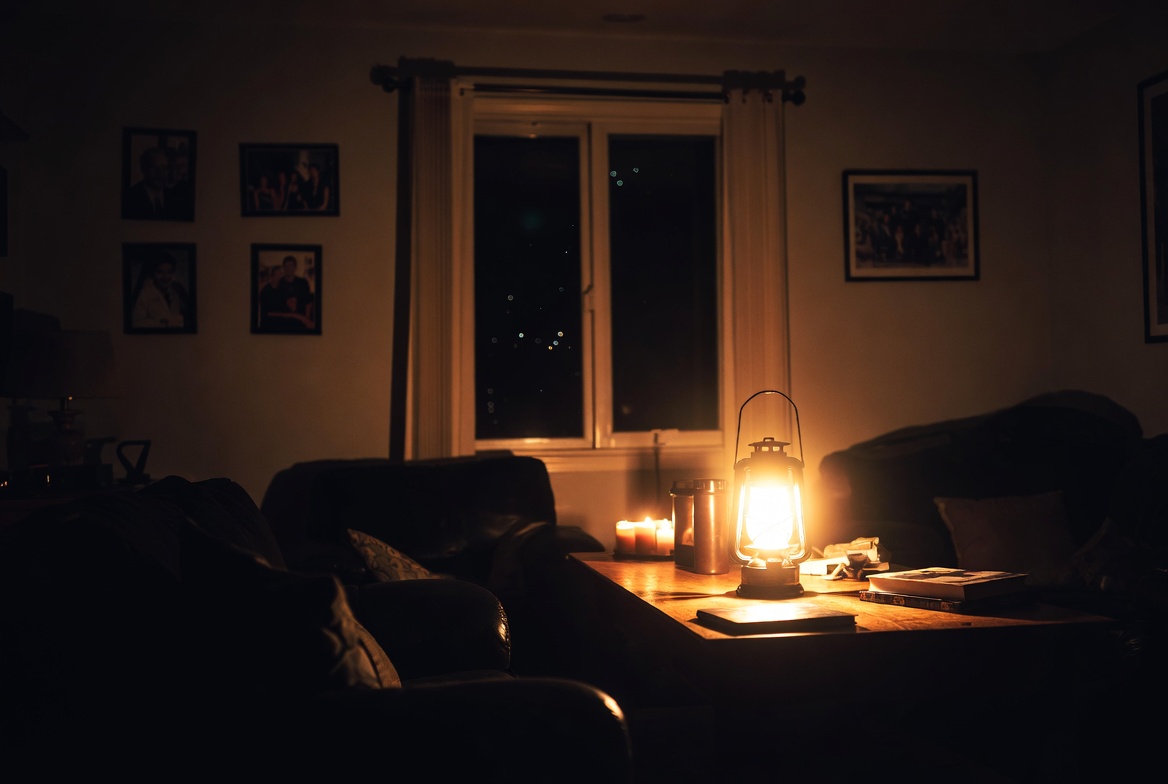
The deadliest part of a winter grid failure is not the storm. It is day four inside the house — when the indoor temperature has been sliding ten degrees a day, the household is improvising heat from things never meant to burn indoors, and the line between cold and dangerous gets crossed quietly, at 3 a.m., by the people least able to notice it happening.
The Shelter & Warmth pillar frames the domain as three priorities — dry, warm, together — and notes that most extended-emergency deaths happen inside houses, from cold and carbon monoxide. This guide is the L2 implementation of the middle priority: holding survivable temperature for two weeks without the furnace. It builds directly on the pillar’s third priority too, because at two weeks, together is not a sentiment. It is the heating strategy.
The strategy: shrink the house
A furnace heats 2,000 square feet because the grid feeds it continuously. Nothing you can store does that. Stored fuel heats maybe 200 square feet, intermittently — which is fine, because 200 square feet is all a household actually needs.
So the plan is not a bigger heater. It is a smaller house:
Pick the warm room in advance. The candidate list is short: smallest practical room, fewest exterior walls, south-facing glass if you have it, on the same floor as a bathroom, with a door. A den or a large bedroom usually wins. Heat rises — a second-floor room over a heated-yesterday space starts warmer than a slab-floor room.
Move everyone in. Sleeping bags and mattresses on the floor, the whole household, pets included. A family of four generates roughly 400 watts of continuous body heat — in a small, insulated room, the occupants are a meaningful fraction of the heating budget. Spread across three bedrooms, that same heat is irrelevant. The pillar’s word for this is together, and in a cold event it is worth more than any single piece of gear.
Let the rest of the house go cold. Close every door, and accept it. The unheated rooms become refrigeration (useful — see the two-week food supply) and windbreak. Their pipes are the one thing you protect: faucets at a trickle, cabinet doors open on exterior walls, and full drain-down if the outage will clearly outlast your heat.
Insulation before combustion
Every degree you keep is fuel you don’t burn. In order of return on effort:
- The doorway. A blanket or comforter nailed over the warm room’s door opening — door closed behind it — is the single highest-value move. Doors leak; a hung blanket over a closed door is a serious air barrier.
- The windows. At night, cover the glass: blankets, sleeping bags, cardboard cut to fit. By day, uncover any south-facing glass and let the sun work; a sunny south window contributes real heat even in January. The rhythm — uncover at sunrise, cover at dusk — matters as much as the material.
- The floor. If the warm room sits over an unheated space or slab, layer it: rugs, moving blankets, the camping pads you already own. Cold floors drain heat from everything touching them, which for two weeks is everyone.
- The people. Layered clothing indoors, hats indoors — heads dump heat, and the bald arithmetic of it surprises people — and sleeping bags rated 20°F or lower as the night system. A body in a real sleeping bag is safe at indoor temperatures that would be dangerous in blankets.
A household that does these four things before lighting anything has typically cut its heating requirement by more than half.
The heat source
The L2 workhorse is an indoor-rated portable propane heater — the class of heater with a low-oxygen shutoff and a tip-over switch built in. They are quiet, cheap, and they turn a fuel you already own (the grill cylinder) into room heat.
The operating rules are absolute, because the failure mode is carbon monoxide, and CO is cumulative, invisible, and faster than its reputation:
- Indoor-rated only. No outdoor heaters, no camp stoves, no barbecue, no oven-with-the-door-open, and no generator anywhere inside — including the garage with the door up. Improvised combustion heat kills more people in winter outages than cold does.
- A window cracked an inch on the far side of the room whenever the heater runs. The heater’s oxygen shutoff is the backstop, not the plan.
- A battery CO detector in the warm room, tested when you set the room up. If it alarms: heater off, window open, everyone out of the room until it clears. No exceptions for “it’s probably the detector.”
- Bare floor placement, three feet from bedding, blankets, and the doorway curtain — remember the room is now draped in fabric.
- Off while the household sleeps. The sleeping bags carry the night. The heater’s job is mornings, evenings, and warming the room before bed.
The fuel math is friendlier than most people expect. On low, a typical indoor-rated heater burns about a quarter pound of propane per hour. Four hours a day for two weeks is roughly 14–15 pounds — under one 20-lb grill cylinder, run through the manufacturer’s adapter hose with the cylinder stored outside. Two full 20-lb cylinders is a comfortable two-week margin with cooking included. Check the cylinders in October, the way you check smoke detector batteries.
If you have a wood stove or a fireplace insert, it outranks everything above — but a decorative open fireplace mostly sends warm air up the chimney, and is worth using only for morale and the coldest hours.
The daily rhythm
Like the two-week power plan, heat at L2 is an operating rhythm, not a stockpile:
Morning. Heater on for the wake-up window. Uncover the south glass. Hot breakfast and a hot drink — the body heats from the inside more efficiently than the room heats from the outside. Check the CO detector’s test button. Check fuel against the budget.
Midday. Heater off if sun is doing the work. The day’s physical tasks — water hauling, snow clearing, anything from the winter storm playbook — happen now, while light is good and the warm room can recover before evening.
Evening. Heater on for the family window: dinner, the radio bulletin, the card game. Windows covered at dusk. Tomorrow’s clothes into the sleeping bags so they’re warm at dawn — an old trick that costs nothing and buys real comfort.
Night. Heater off. Everyone in rated bags, hats on, youngest and oldest in the warmest spots away from the windows. The room rides on insulation and body heat until morning.
Watch each other. Confusion, slurred speech, intense shivering that stops, or unusual drowsiness in any household member — especially the very young and the very old — is hypothermia until proven otherwise. Warm the person, not just the room: dry layers, sleeping bag, warm sweet drinks if fully conscious, skin-to-skin for infants, and medical help if symptoms don’t reverse quickly.
Common mistakes at two weeks
Trying to heat the house. The most common failure, and it fails in three days with empty cylinders. One room, or no rooms.
Improvised combustion. The oven, the camp stove, the patio heater, the charcoal anything. Every winter outage kills households this way. The detector budget — one CO unit, twenty dollars — is the cheapest life insurance in this entire plan.
Sleeping with the heater on. The oxygen shutoff is an engineering control, not a guardian angel. Bags carry the night.
No floor layer. Households insulate the windows and sleep on a slab-cold floor, then wonder why the rated bags underperform. Insulation works in all six directions.
Cotton everything. Cotton holds moisture against skin and loses its insulation value when damp. Wool and synthetics for the base layers, especially socks, especially kids.
Ignoring the pipes. A burst pipe adds a flood to a freeze. Trickle, cabinet doors, drain-down — in that order of escalation. The grid-down playbook covers the decision sequence when the outage has no restoration estimate.
Where to go next
Heat is one leg of the winter-outage triad. The two-week power plan covers light, charge, and the refrigeration cycling that the cold rooms partly solve for free; the winter storm playbook sequences both plans against an actual forecast, hour by hour. The 20°F sleeping bags and the CO detector belong on the shelf next to the 72-hour baseline gear — they are the two purchases from this guide that earn a place at every level.
Two weeks without the furnace is not survivable by accident, and it is comfortably manageable by design: one room, three layers of insulation, forty dollars of detector and adapter hose, two grill cylinders, and a rhythm the household has walked through once on a normal Saturday. Cold given a plan is an inconvenience. Cold given improvisation is the lead story on the local news. Pick the plan.
Questions readers ask.
- How do you heat a house when the power is out?
- You don't — you heat one room. Pick the smallest room on the south side with the fewest exterior walls, move the household into it, and concentrate every resource there: an indoor-rated propane heater for a few hours a day, blankets over the doorway and windows, sleeping bags rated below the expected indoor temperature. A whole house cannot be kept warm on stored fuel; one room can be kept warm for weeks.
- Is it safe to use a propane heater indoors?
- Only if it is specifically indoor-rated — these have low-oxygen shutoffs and tip-over switches. Even then: a window cracked an inch for ventilation, a working battery CO detector in the room, the heater on bare floor away from bedding, and off while the household sleeps. Never run outdoor-only heaters, camp stoves, barbecues, or generators inside, including in the garage. Carbon monoxide from improvised indoor heating kills more people in winter outages than the cold does.
- What indoor temperature is actually dangerous?
- Sustained indoor temperatures below about 50°F begin to stress the very young, the elderly, and anyone with cardiovascular or respiratory conditions; hypothermia indoors is a real and regular cause of death in extended winter outages. The practical floor for a household is keeping the warm room above 50°F around the clock and warmer during waking hours — which one safe heater plus consolidation achieves in almost any climate.
- How much propane do I need to heat a room for two weeks?
- A typical indoor-rated heater on low burns roughly a quarter pound of propane per hour. At four hours a day, two weeks is about 14–15 pounds — three 1-lb canisters per day-equivalent, or far more economically, one 20-lb grill cylinder with the proper adapter hose, run outside-stored and connected per the heater's manual. Two 20-lb cylinders is a comfortable two-week margin with cooking included.
- How do you keep pipes from freezing during a winter power outage?
- Open every faucet to a pencil-lead trickle — moving water resists freezing. Open the cabinet doors under sinks on exterior walls. If the outage will clearly outlast your heat, shut off the main, open the lowest and highest taps, and drain the system; a drained system cannot burst. The water heater keeps its 40–50 gallons either way, which doubles as an emergency water source.
Get the next deep-dive in your inbox.
One new guide every other Sunday. The 72-hour starter pack as a printable PDF arrives the moment you sign up.
- The 72-hour starter pack PDF, immediately.
- A new deep-dive — like this one — every other Sunday.
- No upsells, no data sold, one-click unsubscribe.